|
|
|
|
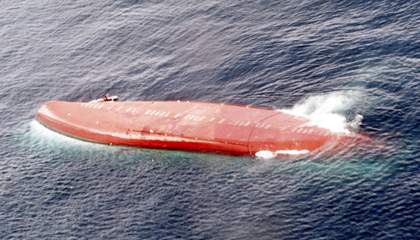
2015 Q. Your web pages about the Costa Concordia incidents 13-14 January 2012 are visited by plenty people 2015. Why do you think they are curious about Costa Concordia? A. It seems to have been a stupid accident but the big ship capsized several hours after the accident and could later be seen spectacularly resting on the rocks. Media immediately informed that the Master had abandoned the ship and alone was at fault. People love that. Blame somebody and really destroy him. The ship owner caught on and fired the Master. Case closed! Q. But you do not agree? A. I worked 20 years 1980-2000 for V.Ships operating, i.a. cruise ships. We had many incidents incl. groundings and collisions, but we never blamed our Masters for them. We investigated the incidents and tried to learn from them in order to improve safety at sea - my business today. But nobody seems to want to learn anything from (back to) Costa Concordia (page). Q. So why do insist that the Master is innocent? A. I always recommend that a serious, impartial investigation is done and not that a fairy tale is invented serving particular or individual purposes. It has not been done. I really got upset when the M/S Estonia sank 1994. Survivors and relatives encouraged me to analyze the information and explanations given by the authorities. I found that all relevant info by the authorites were false or misleading. My 2002 interview is relevant today 2015:
2002 Q. You were one of the first critics of the Estonia investigation. Why? A. I was at sea in the Mediterranean when the accident took place 28 September 1994 but could follow the news reports on radio. I was quite shocked having at that time upgraded several roro-passenger ferries and converted a number of other ships into roro-passenger ferries. I wondered why the Estonia had sunk and if it could happen to my ferries. Once ashore I studied everything written in the press about the accident. By chance I was at that time member of a technical committee at the IMO, London, investigating oil tanker accidents and tanker safety in order to develop guidelines to analyse tanker designs. Börje Stenström, just appointed chief technical investigator of the Estonia incident, was also the chairman of our IMO committee and I met him on Monday 30 October 1994, at 08.30 hrs am, in London, i.e. a month after the accident. I suggested to Stenström to check the intact stability of the Estonia with water in the superstructure - the ship would have capsized and floated upside down. Stenström went pale and told me that I didn't know what it was all about. Then Stenström never wanted to discuss the accident. I found it disturbing. We worked at the IMO checking oil tanker incidents and how to improve oil tanker safety and reduce oil spills and how to improve safety by better design but Stenström didn't want to discuss a recent ferry accident.
Stenström had previously suggested that we should assume that all oil tanker damages developed below the waterline (down to the bilge) and could not accept the new statistics presented that 80% of the damages took place above waterline being less than 25% of the total side. Actually Stenström manipulated the meeting record to the effect that the latest statistics disappeared (!). At the next meeting I had to ask Stenström to properly record the correct statistics, which he did. I thought he had made a mistake but in retrospect I think the 'error' was intentional. Stenström (and the IMO) was easy to manipulate. Q. Back to the Estonia. What did you then do? A. The summer 1996 I collected all the information I had and, at the request of my mother, wrote an article which was published in the largest Swedish daily newspaper Dagens Nyheter on 15 August 1996. It suggested that the Estonia sank due to a leakage below the waterline of the hull. The reaction of the Commission was amazing: the Commission told Swedish news agency TT that the article was unintelligent and unscientific gibberish by an unreasonable person. My mother became very upset. Her son being ... blah, blah, blah. After the article was published I got a lot of information from the German group of experts so I wrote another article in Lloyd's List, London, to the same effect published in November 1996. Then more information arrived. It was quite clear that the Commission was not telling the truth. The lies had started the same day of the accident. At that time of course all the work of the Commission was secret so it was difficult to prove the lies. At that time, October 1996, Stenström also wrote to me stating he never wanted to hear from me. A couple of months later, February 1997, Stenström suddenly died of cancer or was killed. It was strange - Stenström was never treated against cancer. He was working till the end. I got very upset about the whole thing, so I started, I was in Egypt, to write the book 'Lies and Truths about the M/V Estonia accident'. Then the Final report was published in December 1997 - it was clear that it was a report of lies from A to Z. Nothing was correct. My book was printed at Monaco in January 1998 and it got good reviews in some technical publications and in one Swedish daily - Finanstidningen. Finanstidningen really pushed my ideas. But the result was disappointing - no real discussion started. But a lot of other parties started to work really hard with various aspects of the accident and the investigation. The difficulty was that everything was falsified by the Swedish government - reports, testimonies, conclusions, etc. Wherever you looked nothing fitted, but it was quite cleverly done. It is described in my latest book 'Disaster investigation' written and published 2002 on the Internet. Q. But how is it possible to falsify everything? A. If you study the work of the Commission 1994-1997 you find that nothing was properly recorded and that the evidence was continuously manipulated and modified to suit the early allegations from 1994. I think no proper investigation was ever done. What the Commission tried to do was to write a completely false investigation report. It was of course difficult or impossible. So they gave up and allowed a 'ghost writer' to complete the fairy tale. It was a collective effort. Nobody was personally responsible for any investigation. It was just a big show. Q. But a Final report was issued in December 1997. A. Evidently, but it was not written by the Commission. The Commission met for the last time in March 1997 and stated then that the report was complete and finished, but it was not true. During the summer of 1997 an outside expert of misinformation collected the bits and pieces of the Commission's work and wrote the Final report. Why do I think so? Well, there exists no manuscript of the complete and finished report from March 1997. Q. Why was this not discovered? A. The Commission was clever - for three years they repeated over and over again that the bad visor locks caused the accident and that water on the car deck sank the ship and the media splashed these two false statements on the front pages as fact. The public could then not believe anything else. And the falsifications were quite clever: the plot of the accident (figure 13.2 in the Final report) is of course a plot of an undamaged ship and not of the sinking Estonia, but it is difficult to see if you are not an expert. Furthermore, the Commission and the Final report actually make references to the various stability calculations suggesting that the ship was stable, when listing with water in the superstructure, and nobody evidently queried it. But if you really tried to repeat the calculations you could never get the same answers, and if you really bothered to locate the original calculations it was easy to spot the falsifications. The Commission falsified the stability calculations to the effect that the ship was floating on a 100% watertight deckhouse more than ten meters above the waterline! A criminal manipulation of the Final report. Q. You have suggested several times that the lifesaving equipment and the watertight subdivision of the Estonia were defective. A. It is obvious. The M/S Estonia had only correct lifesaving equipment for less than 1 200 persons but was certified from for more than 2 100 persons. The Commission only invents the suggestion that the lifesaving equipment was correct. The Estonia was also like a Swiss cheese in the hull - much too many, 22!!, watertight doors in the watertight bulkheads ... always kept open. The Commission cleverly forgets to mention anything about watertight subdivision, watertight doors and bilge pumps. Q. You met the Estline captain Erich Moik at Stockholm in the autumn 1998. A. Yes. I went aboard the M/S Regina Baltica to hand out some free copies of my book and I met captain Moik. A very nice person. I liked him a lot. We discussed the matter and agreed that the M/S Estonia sank due to a leak in the hull and captain Moik suggested that it was the starboard stabilizer fin foundation that broke. It is possible. Q. Do you have other suggestions? You have mentioned problems with the swimming pool? A. Later I got more info from survivors what happened aboard. There seems to have been one bang, say, about 15-20 minutes before the ship started to heel (at 01.02 hrs), and it could very well have been the stabilizer foundation that broke ... or a collision. Then there were definitely two hard bangs/impact just before 01.00 hrs - a collision - and then the ship suddenly listed a lot, >30°, to starboard, and then it came back to a stable position at 10-15 degrees list. The origin of these two last bangs/impacts is unknown. The ship may have collided with something. Or the strange swimming pool on deck 0 recessed down into the double bottom started to leak. I have never heard about a ship with a swimming pool in the double bottom but the M/S Estonia had one. It was of course very dangerous, particularly, if it was rusty. I think something went wrong with the swimming pool. The final report does not mention the swimming pool at all. They call it a sauna! But it could of course have been an act of sabotage, a crime. The visor had nothing to do with the accident. It was removed afterwards by the Swedish navy using explosives. It fell to the bottom but below the bow but it could not remain there. So it was lifted and brought ashore ... by the Swedish navy. Crazy, isn't it? Q. What is your opinion about the un-dead Estonians? A. I agree with captain Moik that it is very likely that captain Piht and chief engineer Leiger survived and later were made to disappear. It seems 8-9 Estonian crew members were picked up by the Swedish helicopter Y64 at around 02.50 hrs and that another three were picked up by the 'Mariella'. But I have no evidence except the fact that the whole Final report is false from A-Z. Every essential fact in the Final report is either directly false or misleading. You do not write such a report unless you have a very good reason. And Captain Piht and chief engineer Leiger may be that reason - they knew what really happened. I think it is a scandal that no bodies were salvaged from the wreck. But as they say, no bodies, no crime. Q. What really happened? A. It is very easy to find out, just ask, e.g. 3/E Margus Treu, Henrik Sillaste and Hannes Kadak. They have stated that they were in and remained in the Engine Control Room on deck 1 long after the Estonia started to list and that they tried to save the ship by ballasting, etc. Only then, when it was not possible after 8-10 minutes of heroic work, they decided to escape to deck 8, which they managed to do in two minutes. However, everything they say is lies. Nobody could have remained down on deck 1 for ten minutes and then save himself. They lied at every questioning time or interview (or their answers were manipulated). Or just ask the other surviving crew members. They all know what happened. Q. But why haven't they told the real story before? A. They were definitely threatened to keep quiet and to tell another story 1994. The political and economic situation in Estonia was then unstable, most people still behaved as under Soviet times and it was very easy to prepare the foundation of a false investigation, etc., even if it was difficult to write the Final (false) report. Now it seems that most Estonians want to forget the whole Estonia accident, but I believe it is wrong. The independent Estonian republic is soon ten years old - it is time to clean out the skeletons from the early years. The Estonia accident is one such skeleton. It is up to the Estonian people. I myself am mainly interested in safety at sea and to prevent future Estonia accidents. I hope the Estonian people will come together and decide that the investigation is done again. It is the only solution. Read Estoniabluffen Send comments to anders.bjorkman@wanadoo.fr
|