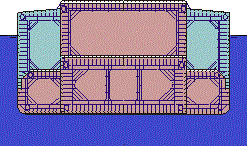
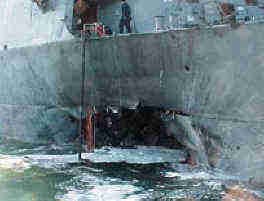
The double hull VLCC 'Limburg', b.
2000, suffered an explosion in the double hull on 6
October 2002, outside a load port in Yemen. The
vessel was 20% part-loaded with cargo in some wing
tanks at the time and the weather was good. The
draught of the ship may have been about 7-8 meters.
This was the first time that a serious explosion
occurred in a double hull VLCC and the question is
of course what caused it?
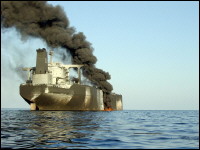
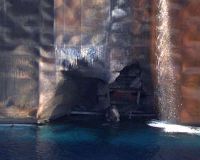
The damage in the starboard side shell is a big opening -
hole - about 10 meters long and about 5 meters high above
the waterline at 7-8 meters above the keel. The extent below
waterline is not known - 6 meters?.
The damage is situated slightly aft of mid-length between
vertical web frames, web spacing about 5 meters, i.e. the
side shell has been ripped off from one intermediate
vertical web frame. The inner shell - about 3 meters from
the outer shell - appears to be intact but is fractured and
deformed inboard. Some edges of the damaged hole in the
outer side shell are bent outboard.
It seems that the cargo tank boundary inside the
damage was fractured and that cargo oil later leaked out and
started to burn - see the picture above. The cargo oil
flowed out on the sea and for a while the tanker was
surrounded by burning crude oil. However, after a further
while the fire burnt itself out and , e.g.the engine room is
still intact. Apparently the crew did not try to extinguish
the fire.
What caused > 50 m² of stiffened 20 mm
thick side shell plate (right) to disappear. Some
'experts' argue that it was a terrorist attack like
the 'Cole' (remote right) twoyears
earlier, but it was lightly built warship with a
very thin shell plate (10 mm). Heiwa Co is
at loss to see how you blow off > 50 m² of
20 mm thick shell plate from the outside of a
tanker? An internal explosion inside a cell in the
double hull seems also a likely cause. Hydrocarbon
gas may have collected in one or two cells in the
double hull bounded by vertical webs and horizontal
stringers and the gas had exploded.
The
'Limburg'
The
'Cole'
The reason why the explosion did not expand upwards
and blow up the deck of the tanker is that there are two
horizontal stringers between the damage and the deck. Thus
the side shell blow out from inside, where the resistance
was the least. 12 seamen on deck preparing to moor the
'Limburg' panicked (she was three miles from the port)
and jumped overboard but were quickly picked up by boats
assisting with the mooring.
The double hull VLCC was quite new and it is a well known
fact that structural defects occur early in the life of a
tanker. It could simply have been due to a minor leak -
fracture - in the inner hull resulting in crude oil
collecting in the bilge of the double hull. The gas filled
some cells in the double hull and ignited. Leaks between
cargo tanks and double hull spaces in VLCCs have occurred
previously. The leak may be due to pitting of the inner
bottom or a fracture. Such leaks have caused big problems as
it has been extremely difficult to clean the oil and gas
filled double hull compartment and it is one of the major
disadvantages and risks of double hull tankers. These risks
have been highlighted on another Heiwa Co webpage
operations.
A careful inspection of the 'Limburg' before repairs
will no doubt determine the exact cause and events of the
accident. Latest news (13 October 2002) is that the initial
damage was caused by a criminal attack of a small boat with
explosives - a terrorist attack. It rammed the tanker and
delivered the explosives that exploded both inside and
outside the double hull - and blow the side shell outboard
probably destroying the attackers. Very strange indeed.
Where did this boat come from? What was the purpose of such
a stupid attack? The damage was thus a big hole in the outer
shell and a fracture in the inner shell.
Water then flowed into the empty side ballast tank and
the fracture in the inner shell allowed all the oil in the
damaged cargo wing tank, which happened to be loaded, to
flow out where it caught fire. First the oil above the
waterline flowed out by gravity, later the last bottom oil
in the cargo wing tank was forced out by water flowing into
the cargo tank. The double side hull ballast tank was empty
and it should first have been flooded and the tanker should
have heeled a little towards the damage.
It was apparently not possible to extinguish the fire by
the tanker's own fire extinguishing means. One idea would
have been to fill the ruptured double hull side ballast tank
with foam and to see what happened. Maybe the foam would
just have flowed out into the sea but it would have been
good to have tried. It would be interesting to know if the
'Limburg' crew actually tried to fight the fire and how,
and, if not, why?
Had the same initial event happened to a partly
loaded COULOMBI EGG tanker all cargo had been loaded
in the upper centre tanks and nothing had happened - no
fire, no oil spill. The same thing would have happened if
the COULOMBI EGG tanker was fully loaded. This
was not one of the design conditions of the COULOMBI EGG
tanker but is a logical consequence of the COULOMBI
EGG tanker design. However, the COULOMBI EGG
tanker fire extinguishing system provides for the top
side ballast tank being filled with foam due to the risk of
a fire there.
Had the 'Limburg' by chance carried the part oil
cargo in the centre tanks there would have been no fire or
oil spill.